

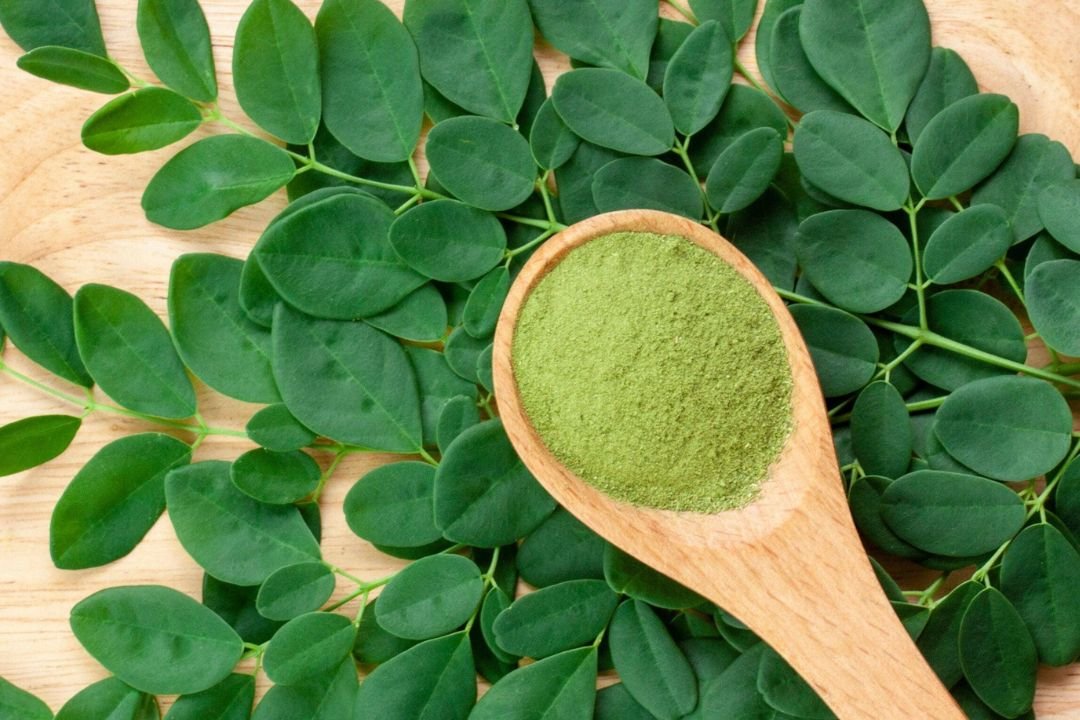
Moringa (Moringa oleifera), often referred to as the “miracle tree” or “drumstick tree,” is a nutrient-dense plant native to parts of Asia and Africa. It is rich in vitamins, minerals, antioxidants, and other beneficial plant compounds. Nearly every part of the tree—leaves, seeds, pods, and roots—is edible, but the leaves are most commonly consumed in powders, capsules, and dietary supplements.
Here are the key evidence-based health benefits of moringa:
1. Exceptional Nutritional Profile
Moringa leaves are packed with essential vitamins, minerals, and amino acids. Per gram, moringa leaf powder contains:
- Vitamin C: Significant amounts to support immunity.
- Vitamin A (Beta-carotene): Promotes vision and skin health.
- Calcium & Iron: Essential for bone strength and oxygen transport in blood.
- Plant Protein: Contains all 9 essential amino acids, making it a rare complete protein source among plants.
2. Rich in Antioxidants
Moringa is loaded with antioxidants that help neutralize free radicals and reduce oxidative stress:
- Quercetin: A potent antioxidant that may help lower blood pressure.
- Chlorogenic Acid: Helps moderate blood sugar levels after meals.
- Polyphenols & Flavonoids: Support overall cellular protection.
3. Helps Lower Blood Sugar Levels
High blood sugar is a primary marker for diabetes and cardiovascular issues. Several human and animal studies suggest that moringa can help lower blood glucose levels, largely due to plant compounds like isothiocyanates and chlorogenic acid.
4. Reduces Inflammation
Chronic inflammation is linked to conditions such as heart disease, arthritis, and metabolic syndrome. The isothiocyanates, alkaloids, and flavonoids in moringa leaves and seeds possess strong anti-inflammatory properties that help inhibit inflammatory enzymes in the body.
5. Supports Heart Health & Cholesterol Control
Moringa has been shown to have cholesterol-lowering effects similar to flaxseed and almonds. High cholesterol increases the risk of heart disease, and moringa helps lower LDL (“bad”) cholesterol levels while protecting blood vessels from oxidative damage.
6. Promotes Digestive Health
- Fiber Content: Whole moringa leaves are high in dietary fiber, which aids digestion and promotes gut regularity.
- Antimicrobial Properties: Compounds in moringa may help inhibit the growth of harmful gut pathogens.
- Ulcer Protection: Its anti-inflammatory properties help soothe the stomach lining and manage digestive discomfort.
7. Boosts Brain Function & Mood
The antioxidants (Vitamins C and E) in moringa help combat neuron degeneration. Research suggests moringa may help normalize neuro-transmitters like dopamine and serotonin, which play key roles in mood, memory, and cognitive focus.
8. Support general energy and vitality
Its nutritional content may help support normal body functions. However, strong evidence that moringa directly boosts energy or reduces fatigue is limited.
9.Provides nutrients for skin and hair
Its nutrients and antioxidant compounds contribute to overall nutritional health. Direct benefits from oral moringa supplements for hair growth or skin appearance are not well established.
10.Supports normal immune function
Moringa supplies nutrients involved in normal immune function, although it has not been proven to prevent infections or strengthen immunity beyond established nutritional needs.
Pura Moringa Vs Moringa Extract
While pure moringa functions like a whole food, an extract functions more like a targeted, high-potency supplement.
1. Pure Moringa (Whole Leaf)
How It’s Made
Fresh leaves from the Moringa oleifera tree are harvested, shade-dried to preserve delicate vitamins, and milled into a fine green powder. Nothing is added or removed.
Standard Dose
3,000 mg to 5,000 mg pure powder (1–2 teaspoons) per day.
Pros
- Complete Nutritional Matrix: Retains the natural balance of plant protein, dietary fiber, vitamins (A, C, E), minerals (iron, calcium), and chlorophyll.
- Digestive Support: The natural insoluble fiber helps promote gut motility and digestive health.
- Culinary Versatility: Easily incorporated into smoothies, soups, curries, oatmeal, and baked goods.
Cons
- Requires Larger Doses: You need to consume grams of powder (teaspoons) rather than a tiny pill to get a meaningful amount of active compounds.
- Strong Flavor: The pungent, bitter “green tea/spinach” taste can be difficult to mask.
2. Moringa Extract
How It’s Made
Moringa leaves undergo a concentration process: they are soaked in a liquid solvent (usually water or alcohol) to pull out the active phytochemicals (like polyphenols, flavonoids, and isothiocyanates). The solvent is evaporated, leaving behind a highly concentrated powder.
Standard Dose
250 mg to 1,000 mg extract per day.
Pros
- High Potency in Small Doses: Fits easily into tiny, easy-to-swallow capsules.
- Standardized Actives: High-quality extracts offer standardized levels of specific compounds (e.g., 5% to 20% saponins or flavonoids) for consistent dosing batch-to-batch.
- No Grassy Taste: Can be taken in capsule form or dissolved in liquid without the heavy grassy taste or gritty sediment.
Cons
- Loss of Fiber & Whole-Food Synergy: The extraction process strips away the natural insoluble fiber and may leave out certain water- or oil-soluble vitamins depending on the solvent used.
- Higher Sensitivity Risk: Highly concentrated extracts are more likely to cause mild digestive upset, nausea, or quick dips in blood sugar if taken on an empty stomach.
Which One Should You Choose?
- Choose Pure Moringa Powder if: You want daily whole-food nutrition, extra fiber, an affordable superfood to add to your breakfast smoothies, or general long-term wellness support.
- Choose Moringa Extract if: You want targeted health support (like managing blood sugar or lowering inflammation), prefer taking a pill/capsule, or dislike the taste and texture of green powders.
Important Considerations & Side Effects
Safety Note:
- Pregnancy & Breastfeeding: Women who are pregnant or trying to conceive should avoid moringa bark, roots, or flowers, as they contain chemicals that can cause uterine contractions. The safety of moringa leaves during pregnancy should be discussed with a doctor.
- Medication Interactions: Moringa may lower blood sugar and blood pressure. If you are taking medication for diabetes, high blood pressure, or thyroid health, consult a healthcare professional before adding moringa supplements to your routine.
- Digestive Upset: High doses can have a mild laxative effect if taken on an empty stomach.